The best USB microphones for a home desk depend on whether you need a simple voice setup, a mic that handles multiple people, or a path to XLR gear. These picks span compact desktop models and kits with boom arms, so check the included stand, controls, and device connections against your workspace.
Quick Top Products
Samson Q2U
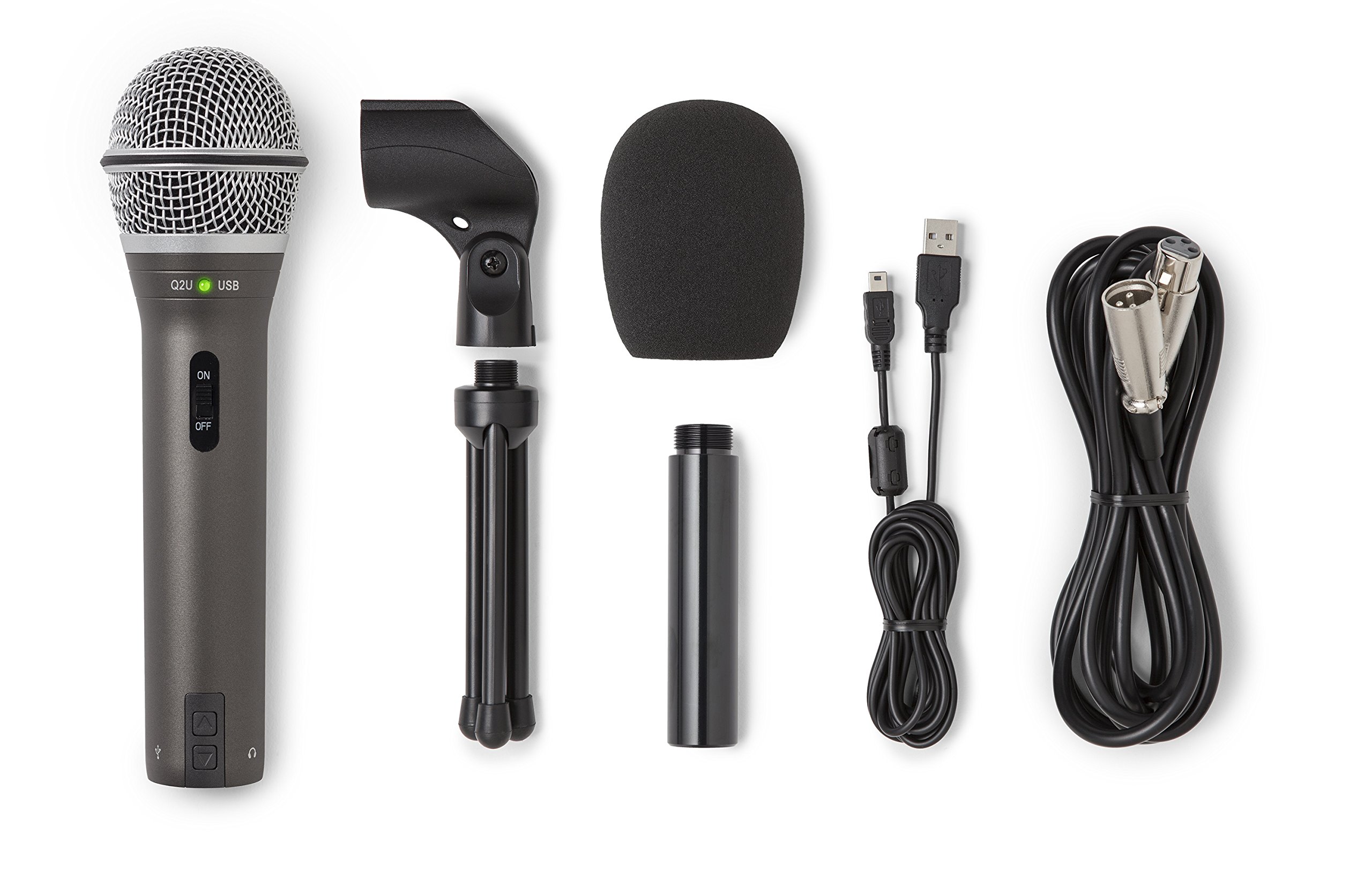
- Offers USB-C and XLR connections.
- Includes a desktop tripod, extension, and mic clip.
- Comes with both USB-C and XLR cables.
Best For: People who want a handheld dynamic mic that can connect by USB-C or XLR.

Samson Q9U
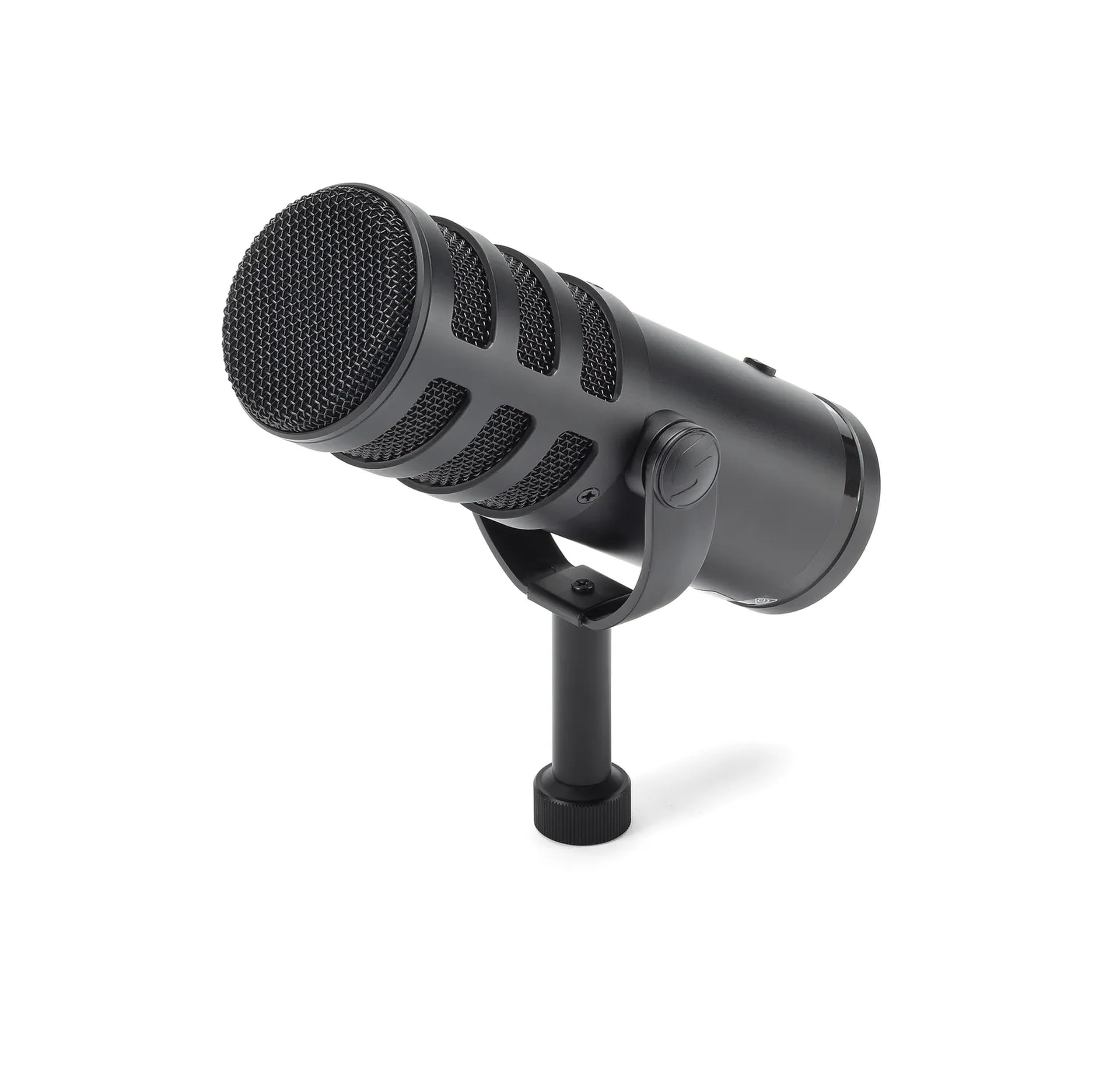
- Connects through USB-C or XLR.
- Supports 24-bit/96kHz digital audio over USB.
- Includes zero-latency monitoring and a mute switch.
Best For: Podcasters and streamers who want USB-C convenience with an XLR broadcast setup option.
JLab Talk
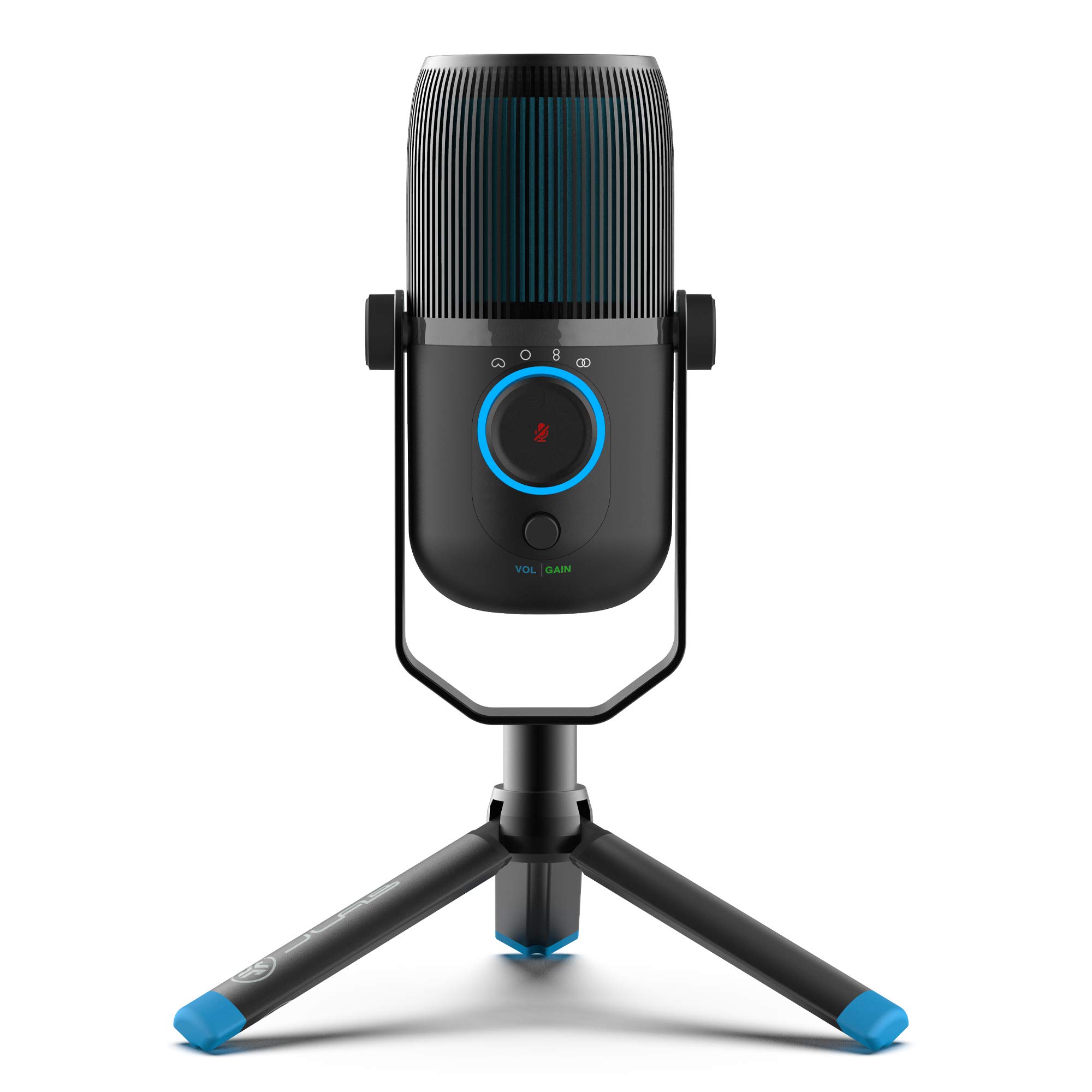
- Provides cardioid, omnidirectional, stereo, and bidirectional modes.
- Includes gain and volume controls with a 3.5 mm AUX input.
- Has a 5/8-inch mounting input for stands or tripods.
Best For: Desktop users recording solo voice, conversations, or stereo material with one USB mic.
FIFINE K669B
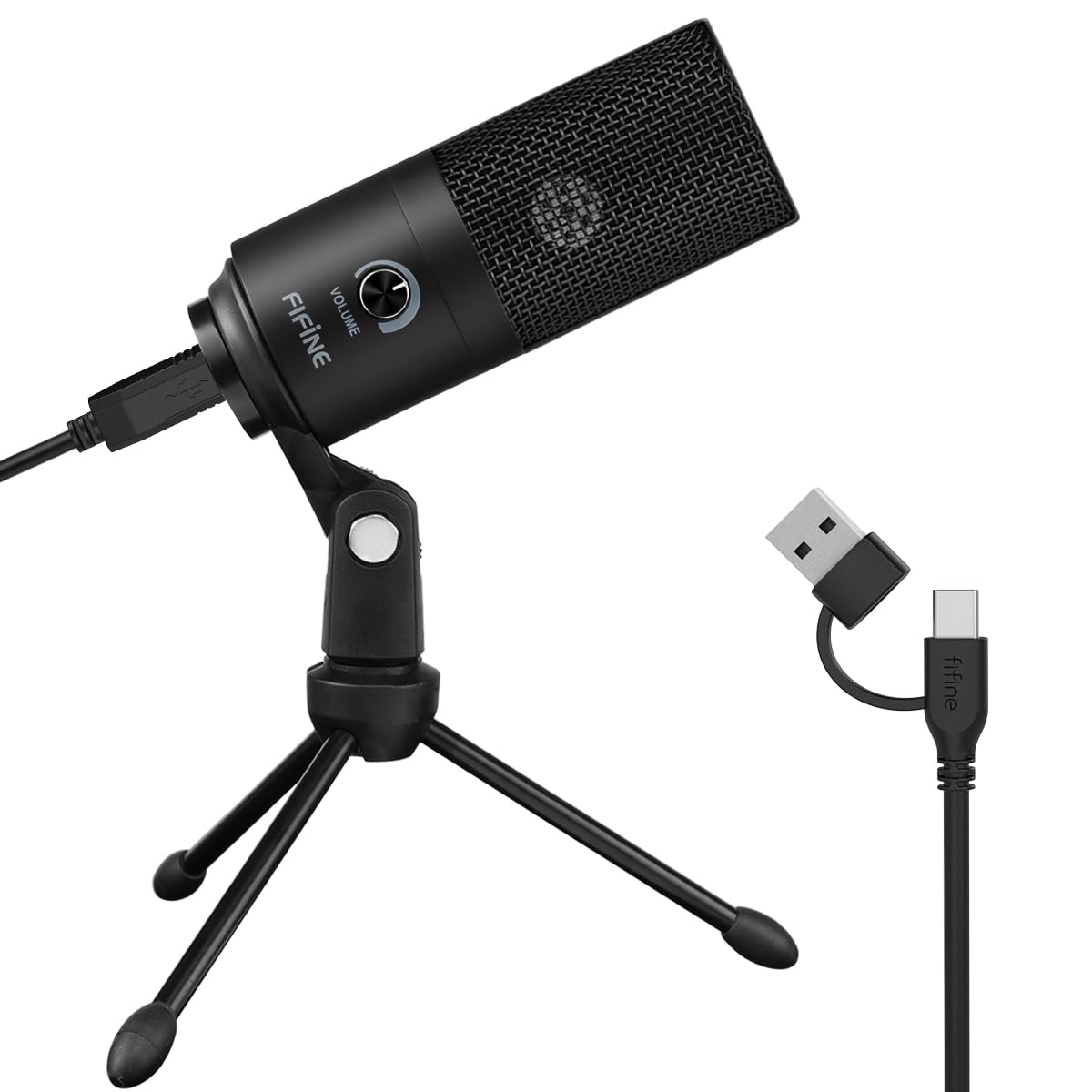
- Connects directly to a USB-A port for plug-and-play use.
- Includes a stable tripod stand and a volume knob.
- Uses a cardioid condenser pickup pattern.
Best For: Budget-minded users who want a basic USB condenser mic with a desktop tripod.
FIFINE AmpliGame AM8T
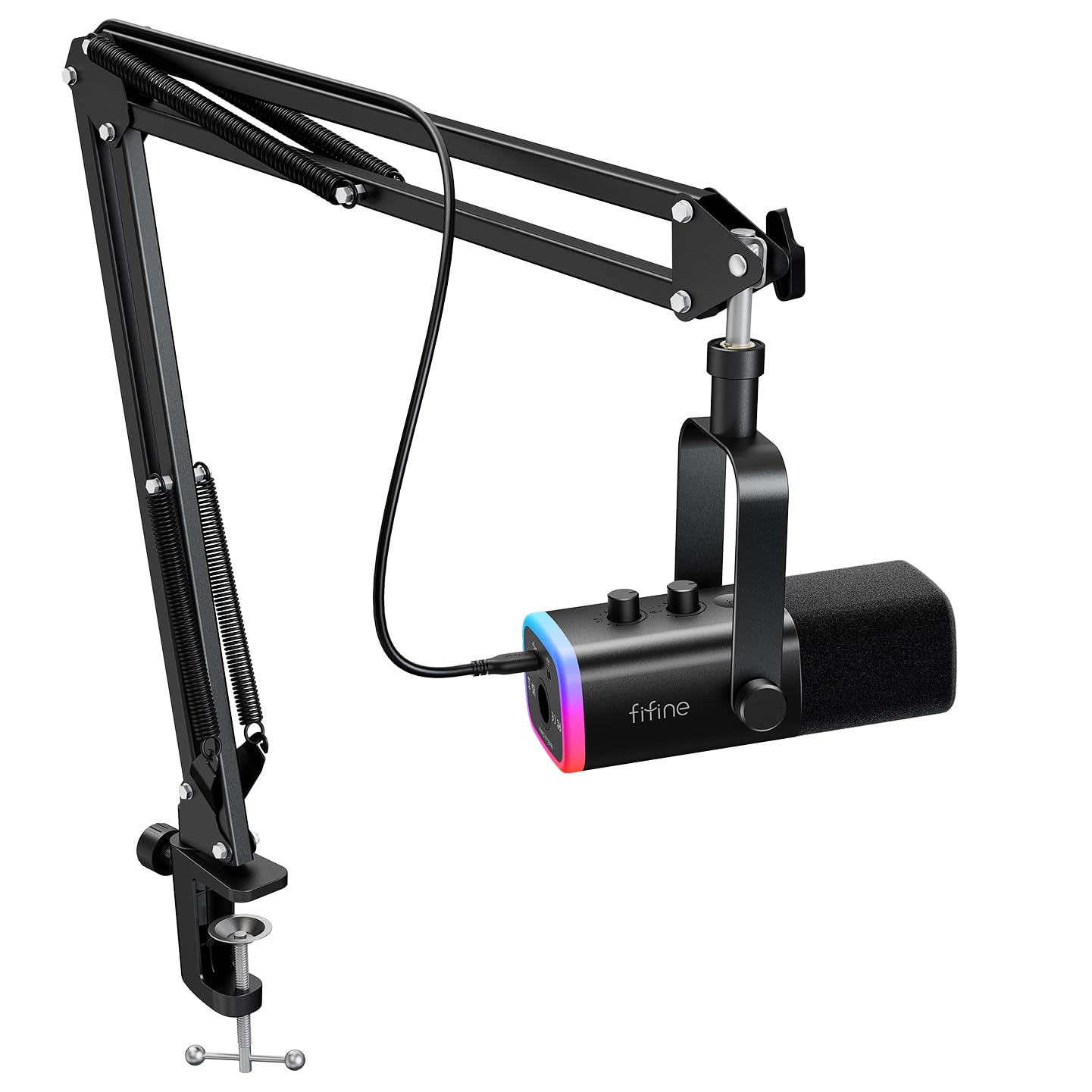
- USB works plug-and-play on PC, and XLR connects to a mixer or sound card.
- Includes a boom arm and desk clamp.
- Has a mute button, gain knob, and headphone monitoring jack.
Best For: Streamers who want a dynamic mic with an included boom arm and a choice of USB or XLR.
MAONO PD400X
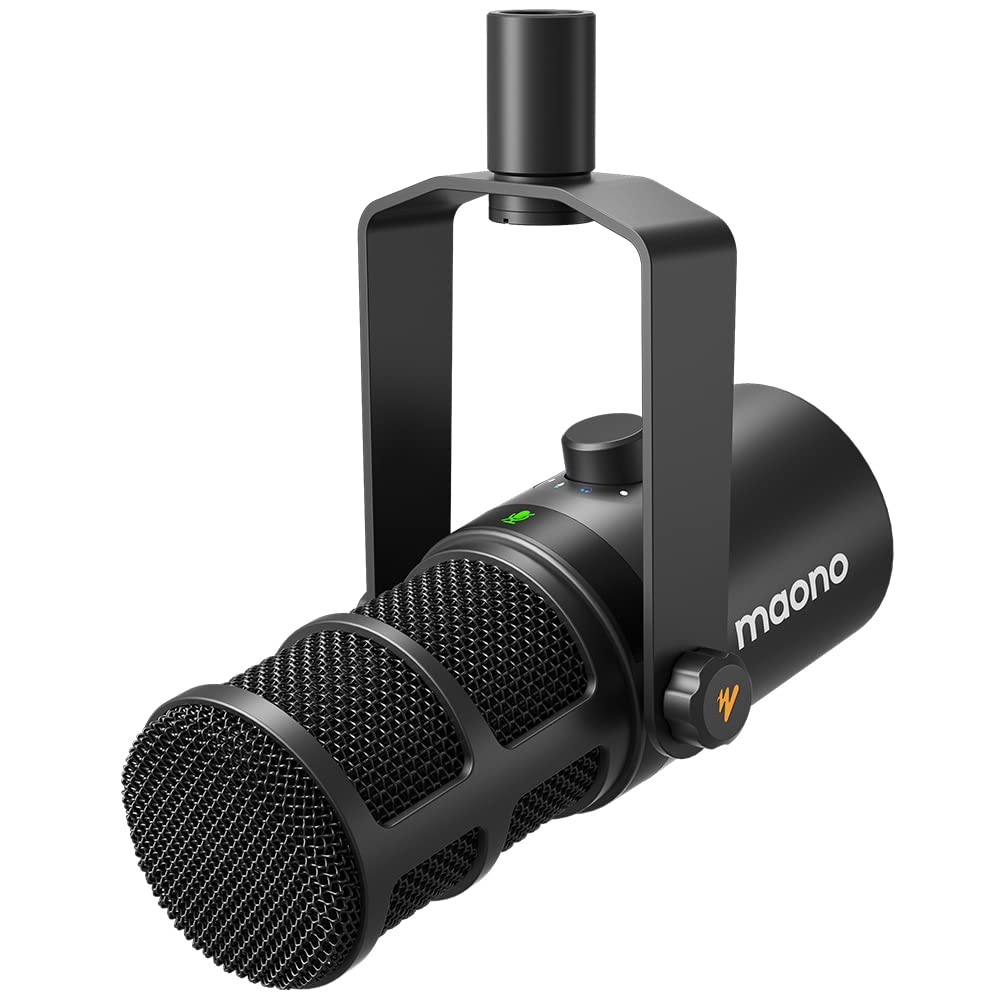
- USB and XLR outputs support computer or audio-equipment connections.
- The digital knob adjusts mic gain, headphone volume, and monitor mix.
- MAONO Link offers EQ, limiter, and compressor adjustments.
Best For: Podcasters who want USB software controls and the option to connect through XLR equipment.
Samson Meteor Mic
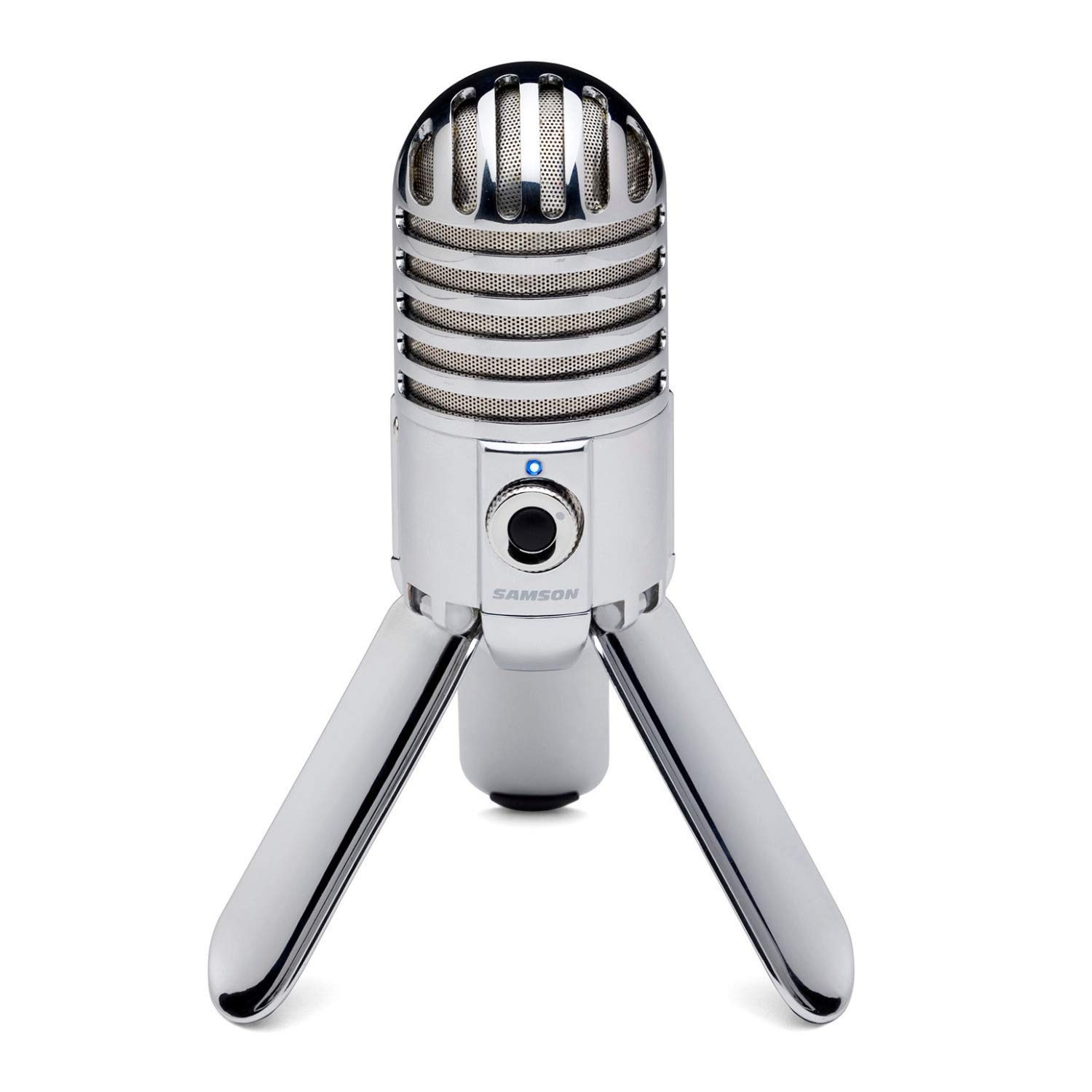
- Uses a 25 mm large diaphragm condenser capsule.
- Fold-back legs support positioning and transport.
- Has zero-latency headphone monitoring with level control.
Best For: People who want a compact USB condenser mic with fold-back legs and headphone monitoring.
USB and XLR Flexibility
Samson Q2U Dynamic USB-C/XLR Microphone
The Samson Q2U is a dynamic handheld microphone with both USB-C and XLR connections. Connect it directly to a computer with a USB-C interface, or use its XLR output with compatible audio equipment.
The included desktop tripod, extension, clip, windscreen, and both cables make it a practical starter package for podcasting or spoken recordings. Its handheld form differs from desktop condenser options, so consider how you want to position it during calls or sessions.
The records do not specify gain controls or headphone monitoring, so check those needs before choosing it over a mic with onboard controls.
Best For: People who want a handheld dynamic mic that can connect by USB-C or XLR.
| Pros | Cons |
|---|---|
|
|
Choose the Q2U if you want a handheld dynamic microphone with both computer and XLR connections, plus the basic desktop positioning accessories in the box. The USB-C route is convenient for a computer with a matching interface; XLR gives you another connection option for compatible equipment.
Before buying, verify your computer ports and whether you need a gain knob or headphone monitoring, since those controls are not specified here.
Broadcast Controls and Monitoring
SAMSON Q9U XLR/USB Dynamic Broadcast Microphone
The Samson Q9U pairs a dynamic microphone with USB-C and XLR outputs, making it suitable for a computer-first setup or a mixer-based recording chain. Its USB connection supports 24-bit/96kHz digital audio and requires no driver downloads, while zero-latency headphone monitoring and an onboard mute switch add useful recording controls.
The cardioid pattern is designed to keep the voice forward and limit ambient pickup. An internal shock mount and dual-layer windscreen are built in.
The supplied facts do not identify a stand or cable package, so check what you need for mounting and connection before ordering.
Best For: Podcasters and streamers who want USB-C convenience with an XLR broadcast setup option.
| Pros | Cons |
|---|---|
|
|
Pick the Q9U if you value an onboard mute, headphone monitoring, and dual USB-C/XLR connectivity in a broadcast-style dynamic mic. Its high-resolution USB mode and built-in shock isolation suit a more involved spoken-word setup.
Confirm whether you already have a stand and the needed cables, because the supplied facts do not identify included mounting or cable accessories.
Four Pickup Patterns on a Desktop
JLab Talk USB Microphone, USB-C Output, Cardioid, Omnidirectional, Stereo or Bidirectional, 96k Sample Rate, 20Hz, 20kHz Frequency Response, Volume, Gain Control, Quick Mute, Plug & Play
The JLab Talk is a desktop USB microphone with four directional pattern modes: cardioid, omnidirectional, stereo, and bidirectional. That range makes it adaptable for solo voice, group conversation, or stereo recording without changing microphones.
It has gain and volume controls plus a 3.5 mm AUX input for real-time listening. The included 6.5-foot USB/USB-C cable supports plug-and-play use, and the mic has a 5/8-inch mounting input for swivel stands or tripods.
Confirm which pattern fits your recording arrangement, since a more flexible pickup choice also requires selecting the right mode for each session.
Best For: Desktop users recording solo voice, conversations, or stereo material with one USB mic.
| Pros | Cons |
|---|---|
|
|
The Talk suits a desk where recording needs vary between solo speech, multiple voices, and stereo material. Its four patterns and gain and volume controls offer more setup flexibility than a fixed-pattern mic.
Check how it will sit on your desk or stand: a 5/8-inch mounting input is provided, but an included support is not specified in the supplied facts.
Straightforward Budget USB Setup
FIFINE USB Microphone, Metal Condenser Recording Microphone for MAC OS, Windows, Cardioid Laptop Mic for Recording Vocals, Voice Overs, Streaming, Meeting and YouTube Videos-K669B
The FIFINE K669B is a USB-powered cardioid condenser microphone for computer recording, streaming, voiceovers, and meetings. It connects directly to a USB-A port, has a metal construction, and includes a stable tripod stand.
A volume knob on the microphone lets you adjust its output or turn it to zero for privacy. The cardioid pattern focuses on sound from the front, which fits a single-speaker desk setup.
It is not compatible with Xbox or phones, so check the device connection before buying. The product notes also flag automatic volume adjustment in some apps as a setting to review.
Best For: Budget-minded users who want a basic USB condenser mic with a desktop tripod.
| Pros | Cons |
|---|---|
|
|
Choose the K669B for a simple computer-based recording setup with a desktop tripod and a physical volume knob. It is USB powered, so you do not need a separate phantom-power supply.
Check that your device has the supported connection and remember the stated Xbox and phone incompatibility. If a meeting or recording app changes microphone levels automatically, review that setting when adjusting input volume.
Boom Arm with USB or XLR
FIFINE XLR/USB Gaming Microphone Set, Dynamic PC Mic for Streaming Podcasting, Computer RGB Mic Kit with Boom Arm Stand, Mute Button, Headphones Jack, for Recording Vocal Voice-Over-AmpliGame AM8T
The FIFINE AmpliGame AM8T is a dynamic microphone kit built around USB and XLR connectivity. Its USB connection is plug-and-play for PC, while XLR can connect to a mixer or sound card.
The kit includes a boom arm, clamp, USB cable, and windscreen; it also has a mute button, gain knob, headphone jack, and headphone-volume control for USB use. Customizable RGB lighting is controlled on the mic.
The clamp fits desks under two inches thick, and an XLR cable is not included. This is a useful fit for a streaming desk if the clamp suits its edge and the USB controls meet your needs.
Best For: Streamers who want a dynamic mic with an included boom arm and a choice of USB or XLR.
| Pros | Cons |
|---|---|
|
|
The AM8T fits a streaming desk where you want an adjustable boom arm and the option to move from USB to XLR equipment. USB mode provides the listed mute, gain, headphone, and lighting controls.
Before buying, check the desk edge against the clamp limit and budget for an XLR cable if you plan to use the analog connection.
App-Based Voice Shaping
MAONO Dynamic Microphone, USB/XLR Podcast PC Microphone with Software, EQ,Tap-to-Mute, Headphone Jack, Gain Knob & Volume Control, Studio Mic for Broadcast, Recording, Streaming & Gaming (PD400X)
The MAONO PD400X is a dynamic USB/XLR microphone aimed at studio and home recording, podcasting, and live streaming. Over USB, its digital knob handles microphone gain, headphone volume, and monitor mix, while a tap-to-mute key has an LED indicator.
MAONO Link adds standard and advanced modes, with EQ, limiter, and compressor adjustments in advanced mode. USB is plug-and-play; XLR connects to an interface, mixer, or portable PA system.
The microphone does not have a supplied stand or cable package specified here, so check your mounting and connection needs before choosing it for a complete desk setup.
Best For: Podcasters who want USB software controls and the option to connect through XLR equipment.
| Pros | Cons |
|---|---|
|
|
The PD400X suits a podcaster who wants a dynamic mic with USB software control today and XLR connectivity for a compatible recording chain. The integrated knob and mute key help manage levels and interruptions without reaching for the computer.
Confirm what accessories are included in the offer you are considering, since the supplied facts do not identify a stand or cable package.
Portable Folding Desktop Condenser
Samson Meteor Mic USB Condenser Podcasting Podcast Recording Desktop Microphone
The Samson Meteor Mic is a desktop USB condenser with a 25 mm diaphragm, cardioid pickup, and fold-back legs for positioning and transport. It provides a 1/8-inch stereo headphone output with level control for zero-latency monitoring.
Its listed 16-bit, 44.1/48kHz resolution suits straightforward voice or instrument recording, and it can work with an iPad when paired with Apple's Lightning USB Camera Adapter or Camera Connection Kit. The folding design keeps the unit self-contained for travel.
Check that you have the required adapter for iPad use and the right USB connection for your computer.
Best For: People who want a compact USB condenser mic with fold-back legs and headphone monitoring.
| Pros | Cons |
|---|---|
|
|
Pick the Meteor Mic if you want a desktop condenser that folds up for transport and has direct headphone monitoring. Its cardioid pickup suits a single speaker or instrument in front of the capsule.
For iPad recording, plan on the Apple adapter or connection kit named in the supplied facts, and confirm the included cable arrangement for your computer.
How to Choose Usb Microphones
How We Picked USB Microphones
We selected distinct USB microphone models for common desk recording needs: solo voice and calls, podcasting, streaming, multi-person capture, and setups that may grow into XLR equipment. We favored candidates with identifiable connection types and use cases, then considered whether the product includes practical setup pieces such as a tripod, boom arm, clamp, windscreen, or pop filter.
The range includes dynamic and condenser mics, fixed and switchable pickup patterns, and both compact desktop units and arm-mounted kits. Accessories and controls matter as much as the microphone format: an included stand can simplify a first setup, while gain, mute, and headphone monitoring controls help manage everyday recording.
Comparing USB Microphones
The most consequential difference is connection flexibility. The Samson Q2U, Samson Q9U, MAONO PD200XS, MAONO PD400X, and FIFINE AM8T pair USB with XLR, while the FIFINE K669B and SteelSeries Alias are USB-focused.
USB offers a straightforward computer connection; XLR is useful when your recording chain includes a compatible mixer or interface. Check whether an XLR cable is supplied: the PD200XS and AM8T records explicitly say it is not.
Pickup patterns also shape the fit. The JLab Talk's four modes cover solo voice, stereo, and bidirectional arrangements, while the K669B and Alias use cardioid pickup for sound in front of the mic.
A multi-pattern desktop microphone suits varied session types; a focused cardioid setup keeps selection simple for one speaker.
Consider where the mic will sit. The K669B and Meteor Mic use desktop supports, the Q2U includes a tabletop tripod, and the PD200XS and AM8T include boom arms.
Arm-mounted kits can keep a microphone closer to the speaker and clear desk space, but check clamp fit and what accessories are included. The Meteor folds for transport, while the JLab Talk has a mounting input for a separate compatible stand.
| Product | Standout features | Best for |
|---|---|---|
| Samson Q2UCheck Price |
| People who want a handheld dynamic mic that can connect by USB-C or XLR. |
| Samson Q9UCheck Price |
| Podcasters and streamers who want USB-C convenience with an XLR broadcast setup option. |
| JLab TalkCheck Price |
| Desktop users recording solo voice, conversations, or stereo material with one USB mic. |
| FIFINE K669BCheck Price |
| Budget-minded users who want a basic USB condenser mic with a desktop tripod. |
| FIFINE AmpliGame AM8TCheck Price |
| Streamers who want a dynamic mic with an included boom arm and a choice of USB or XLR. |
| MAONO PD400XCheck Price |
| Podcasters who want USB software controls and the option to connect through XLR equipment. |
| Samson Meteor MicCheck Price |
| People who want a compact USB condenser mic with fold-back legs and headphone monitoring. |
Choosing a USB Microphone for Streaming or Podcasts
For solo spoken audio, compare dynamic and condenser options alongside your room and placement. Several dynamic picks include mute or gain controls and cardioid pickup; the condenser K669B and Meteor Mic are straightforward choices for a computer desk or portable recording.
Keep the sound source in front of cardioid microphones, and check any stated placement guidance in the product details.
Monitoring and software can make a setup easier to manage. The Q9U offers zero-latency headphone monitoring and a mute switch, while the PD400X combines a control knob with MAONO Link adjustments.
The SteelSeries Alias adds Sonar app routing and visible level and mute cues. These features serve different workflows, so choose around the controls you will use rather than treating software features as interchangeable.
For a gaming or streaming desk, review device compatibility and cable reach before ordering. Some USB microphones in this selection exclude Xbox or phones, while others name PC, Mac, or PlayStation compatibility.
Boom arms and included pop filters can reduce desk clutter or soften plosive sounds, but verify the clamp will fit your desk and note when an XLR cable or boom arm must be purchased separately.
Who Should Buy Which USB Microphone?
Choose the Samson Q2U for a handheld dynamic mic with USB-C and XLR plus a useful starter accessory bundle. The Q9U fits a broadcast-oriented setup that values onboard mute and direct monitoring, while the MAONO PD200XS suits streamers who want a boom arm and USB software controls.
For varied desktop recording patterns, consider the JLab Talk. The K669B is a simpler tripod-based USB condenser option, and the Meteor Mic is a portable desktop choice with fold-back legs.
Choose the FIFINE AM8T when you want a boom arm and USB/XLR paths, the PD400X for app-based voice shaping, or the SteelSeries Alias when Sonar routing and visible level monitoring match your PC streaming workflow.